Strengthening Adult Respiratory Immunisation Programs: Beyond the Lung (Thomas Weinke)

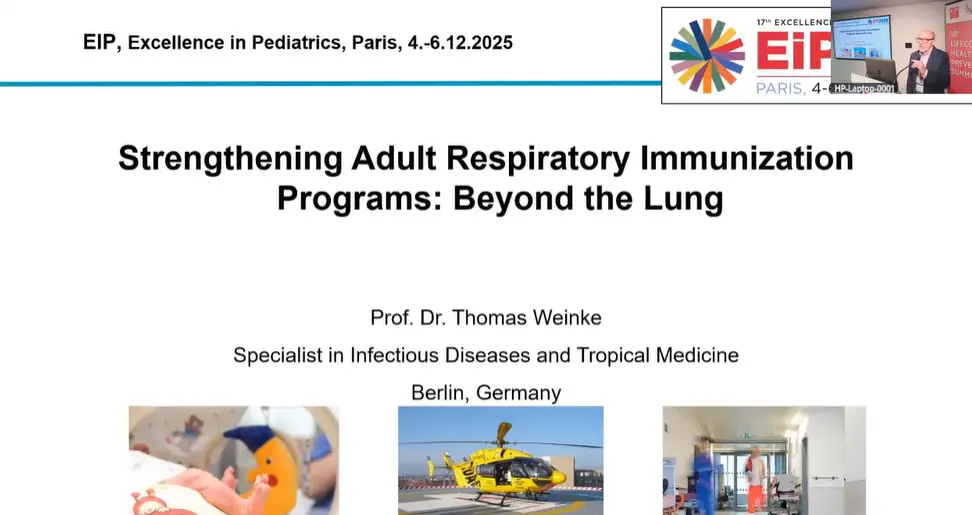
The presentation was delivered and recorded during the 10th Lifecourse Prevention Summit, Paris, December 2025.
Prof. Thomas Weinke, Medical Director and Chief Physician for Gastroenterology and Infectious Diseases at the Ernst von Bergmann Clinic in Potsdam, presents the clinical case for adult respiratory vaccination, focusing on influenza and pneumococcal disease and the evidence that their consequences extend far beyond the lungs.
A central theme of this briefing is that respiratory infections in older adults are systemic diseases. Influenza triggers a cascade of cardiovascular consequences including acute myocardial infarction, ischemic heart disease, and stroke, through mechanisms involving tachycardia, hypoxia, cytokine release, and vasoconstriction. A Danish randomized controlled trial demonstrates that administering a flu vaccine within 48 hours of a myocardial infarction significantly reduces one-year mortality compared to placebo, an effect comparable in size to statins and antihypertensive drugs. The evidence is now reflected in cardiology guidelines at the highest level of evidence, and withholding the vaccine in this context, the briefing argues, constitutes malpractice.
For patients with diabetes, meta-analyses show that influenza vaccination reduces hospitalization and total mortality across both the 18 to 64 and 65 plus age groups. Emerging data from a study of over 900,000 pairs also suggests an association between lower cumulative flu vaccination and increased risk of dementia and Alzheimer's disease. A more recent publication in Nature, based on a mouse model, raises the possibility that systemic inflammation triggered by influenza may activate dormant tumor cells, adding afurther dimension to the non-pulmonary burden of the disease.
On pneumococcal disease, the briefing traces how colonization leads to infection and how the resulting systemic inflammation drives cardiovascular risk. Evidence from a meta-analysis of eight observational studies shows a 17% reduction in myocardial infarction risk among adults over 65 who receive a pneumococcal vaccine.
The closing message is clear: vaccination must be communicated to patients not as protection against a respiratory illness but as a broader investment in functional capacity, healthy aging, and the prevention of serious cardiovascular and neurological events.
.webp)