The Economic and Societal Imperative of Lifecourse Prevention (Nicola Veronese)
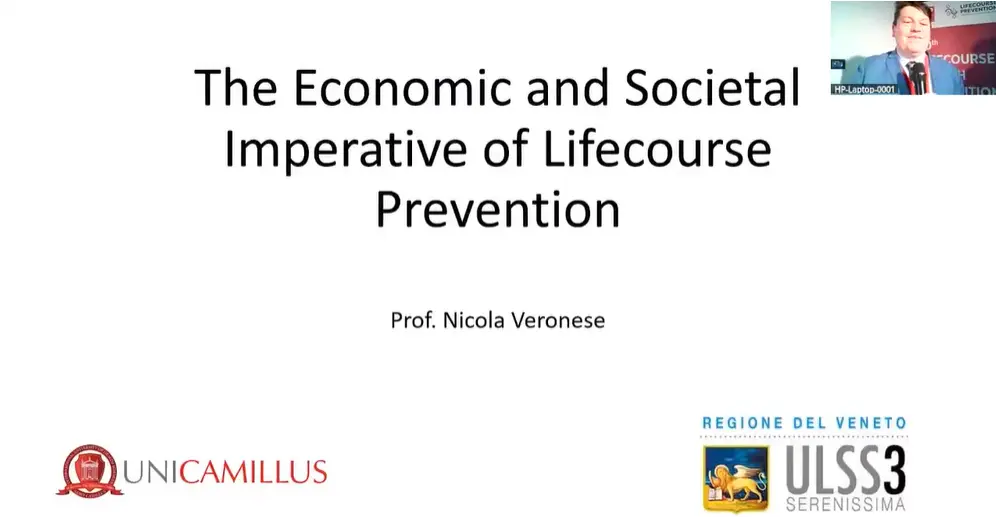
The presentation was delivered and recorded during the 10th Lifecourse Prevention Summit, Paris, December 2025.
In this expert briefing, Prof. Nicola Veronese, Chair of the EuGMS Special Interest Group in Infectious Diseases and Vaccinations, argues that infectious diseases and vaccination are critically underrepresented in current healthy aging frameworks and that this gap needs to be urgently addressed.
Opening with the broad determinants of healthy aging — diet, physical activity, education, housing, social relationships — he underlines that aging well must begin early in life. From his clinical experience,many of the conditions he encounters in older patients, including dementia, frailty, and disability, are difficult or impossible to reverse. Prevention, rather than treatment, is therefore the priority.
Within that prevention agenda, infectious diseases stand out as both highly common and widely underestimated. Using influenza as a key example,the briefing presents evidence that infections in older adults are far from trivial; they can trigger cardiovascular events, increase fracture risk,accelerate functional decline, and reduce quality of life. Emerging observational data also suggest that vaccines against influenza, herpes zoster, and pneumococcal disease may reduce the risk of dementia, though randomized controlled trials are still needed to confirm this.
On the economics of vaccination, evidence from Japan shows that every unit invested returns approximately 20 times that amount to society through avoided hospitalizations. Structural barriers to uptake, including poverty, low income, and the paradox that higher education does not always correlate with higher vaccine acceptance, are also examined, drawing on SHARE study data from around 50,000 older adults.
The briefing closes with a call to embed vaccination more explicitly in healthy aging frameworks and for geriatric care settings to proactively offer vaccination during multidimensional assessments, an approach that can help close coverage gaps among the most vulnerable older adults who might otherwise fall through standard vaccination programs. This includes a specific call for tools such as the WHO's ICOPE framework to incorporate infectious diseases and vaccination, which are currently absent from its domains entirely.
.webp)