The Hidden Burden of Respiratory Viruses in Older Adults: Why Prevention Matters (Stefania Maggi)

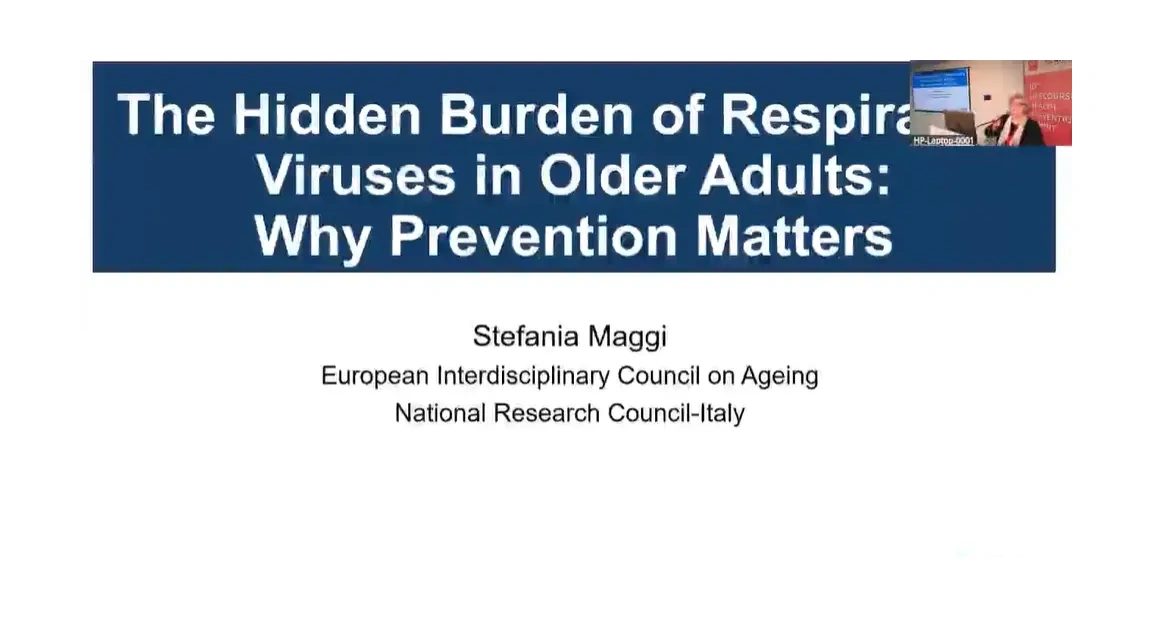
The presentation was delivered and recorded during the 10th Lifecourse Prevention Summit, Paris, December 2025.
Prof. Stefania Maggi, Research Director at the CNR Ageing Branch, Neuroscience Institute in Padova, examines the true burden of respiratory viral infections in older adults, arguing that it is systematically underestimated and that the case for prevention through vaccination is stronger than current coverage rates suggest.
This briefing addresses the data problem; respiratory infections are frequently misclassified or simply not captured, because clinical symptoms overlap across pathogens, diagnostic testing is inconsistent, and surveillance systems in many countries only recently began tracking RSV alongside influenza. Studies show that relying solely on nasopharyngeal swabs may capture only half of actual RSV cases, suggesting the true prevalence of these infections is considerably higher than official figures indicate.
Beyond the acute episode, the consequences for older adults are far-reaching. Immunosenescence, frailty, and comorbidities combine to create a vicious cycle in which infections are both more frequent and more severe, triggering exacerbations of cardiovascular, respiratory, and metabolic conditions. In the week following an influenza episode, the risk of myocardial infarction rises by 2.8 times; for RSV, that figure reaches 3.2. A Swedish cohort study tracking lung function from age 7 to 55 illustrates how early-life infections shape lifelong respiratory trajectories, with those on the lowest trajectory facing a 46% risk of COPD by age 53, compared to less than 1% among those on the highest trajectory.
Long COVID adds a further dimension. Affecting more than 65 million people globally, according to WHO estimates, it is more common in those with severe or recurrent infections, and emerging evidence suggests that vaccination may reduce its incidence, making prevention relevant not only for older adults but also for working-age populations, with significant socioeconomic implications.
Despite the availability of effective vaccines, coverage across Europe remains far below targets. In most countries, RSV vaccination programs are absent entirely, and no country has achieved the 80% coverage threshold for COVID or the 75% threshold for influenza in adults over 60 set by the Immunization Agenda 2030. The briefing closes with a clear argument: without a decisive shift toward prevention and sustained investment in vaccination across the life course, health systems focused primarily on curative medicine will face mounting, and avoidable, pressure.
.webp)