Why Lifecourse and Adult Immunization are Essential for an Ageing Society (Diane Thomson)

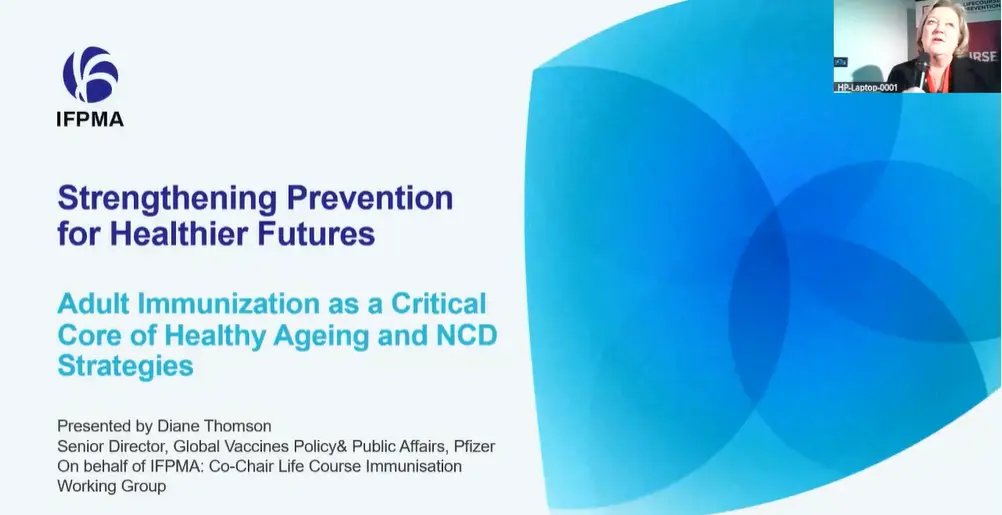
The presentation was delivered and recorded during the 10th Lifecourse Prevention Summit, Paris, December 2025.
In this expert briefing, Ms Diane Thomson, Co-chair of the IFPMA Life Course Immunization Working Group, makes the case for vaccination as a critical but underutilized lever in the management of non-communicable diseases (NCDs). Her central argument is that the relationship between communicable and non-communicable diseases is consistently overlooked in policy, and that this disconnect carries significant consequences for healthy aging and health system sustainability.
NCDs currently drive 75% of global deaths and cost an estimated two trillion dollars annually. Respiratory infections such as influenza, RSV, COVID-19, and pneumococcal disease compound this burden considerably, particularly in older adults and those already living with chronic conditions. The evidence she presents is striking: influenza vaccination is associated with a 45% reduction in major adverse cardiovascular events in the 12 months following a heart attack and a nearly 20% reduction in stroke risk compared with unvaccinated individuals.
Despite this, vaccine uptake remains low. A spike in flu vaccination during the COVID-19 pandemic has since reversed, and uptake of recommended vaccines among eligible adults continues to fall well short of what the evidence supports. Thomson attributes this in part to the failure of vaccine technical committees to account for immunosenescence, the gradual decline in immune function that begins around age 50, well before most adult vaccine recommendations take effect.
A 2024 Public Health Scotland RSV vaccination program illustrates what targeted, well-designed programs can achieve: 70% uptake in the first season and a 60% reduction in hospital admissions, driven by a multichannel outreach campaign tailored specifically to older adults.
The closing call is for vaccination to be embedded within NCD management frameworks, and for policymakers to move from disease management to disease prevention.
.webp)