Mistrust and Misperceptions: Vaccine Trust and Confidence in the Context of Inequality (Pauline Paterson)

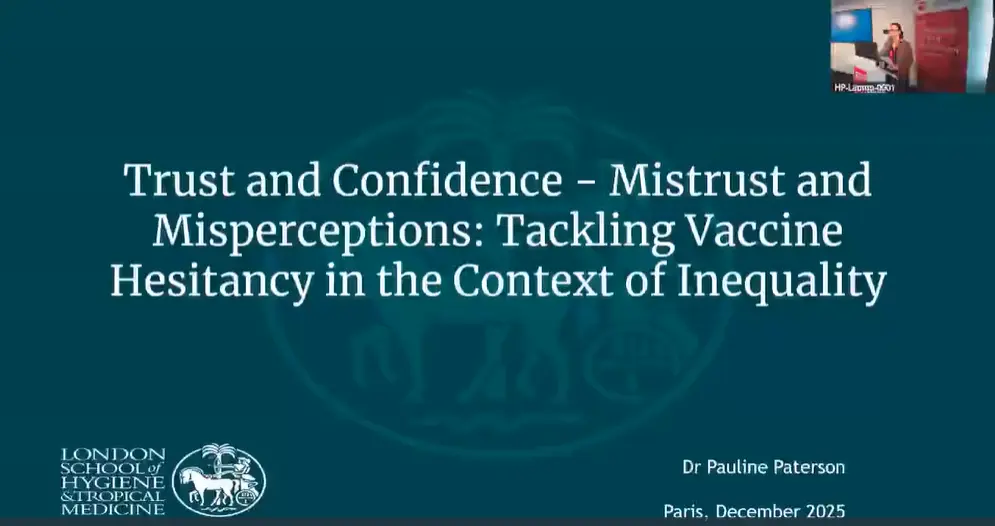
The presentation was delivered and recorded during the 10th Lifecourse Prevention Summit, Paris, December 2025.
What drives vaccine hesitancy and what can actually be done about it? Dr. Pauline Paterson, Associate Professor at the London School of Hygiene & Tropical Medicine and researcher at the Vaccine Confidence Project, brings global and European data on vaccine confidence and the complex, multi-layered drivers of vaccine hesitancy.
The data offers a sobering starting point: the European region has the lowest confidence in vaccine safety, importance, and effectiveness of any region globally, alongside low levels of trust in national governments and health authorities. Tracking through the Vaccine Confidence Index, which measures public views on whether vaccines are important, safe, and effective, the briefing identifies a particularly concerning trend among 18 to 34-year-olds, whose confidence across all three dimensions has dropped significantly in recent years, including for the MMR vaccine.
A central theme is that hesitancy is rarely just about the vaccine itself. Drawing on the WHO SAGE framework, the briefing maps the overlapping determinants of vaccine decision-making: complacency, convenience, confidence, social norms, habit, institutional trust and structural barriers. Those who are vaccine-hesitant, research consistently shows, also tend to distrust institutions more broadly, and that relationship runs in both directions.
The role of misinformation receives particular attention. Four in ten people globally report having regretted a health decision based on misinformation, with younger adults disproportionately affected. The sources of that misinformation are telling: product advertising, friends and family, anduser-generated content rank above social media algorithms. Meanwhile, healthcare providers remain the most trusted source of vaccine advice, but are stretched too thin to consistently deliver the kind of tailored, confidence-building conversations the evidence calls for.
What emerges is a call to move beyond information-deficit thinking. Reaching hesitant populations requires being present in the rightspaces, engaging with genuine concerns rather than dismissing them, and rebuilding the institutional trust that effective public health communication ultimately depends on.
.webp)