Ensuring Persistent Protection: Lifespan Strategies Against RSV, Influenza, and SARS-CoV-2 to Reduce Systemic Health Risks (Marco Del Ricchio)

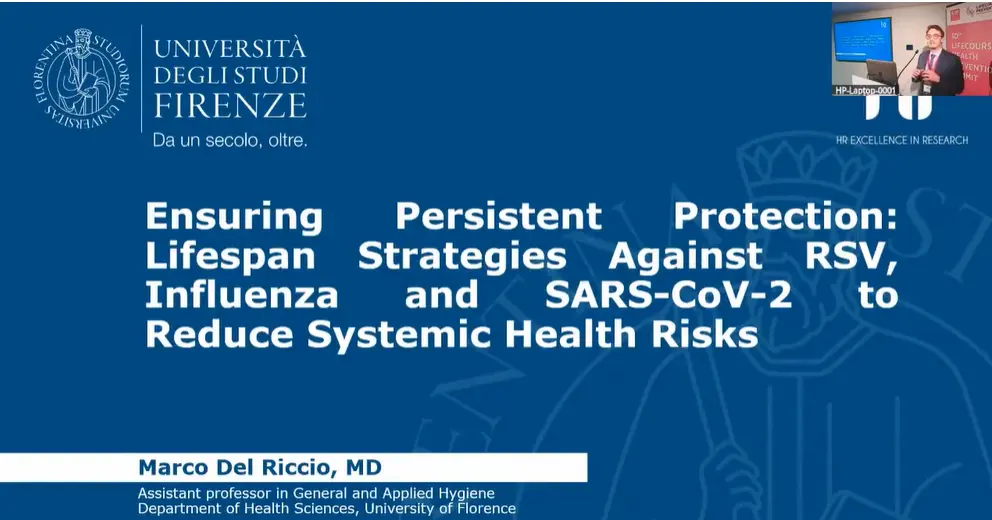
The presentation was delivered and recorded during the 10th Lifecourse Prevention Summit, Paris, December 2025.
Dr. Marco Del Riccio, Assistant Professor of Public Health at the University of Florence, presents a comprehensive review of the burden of RSV, influenza, and SARS-CoV-2, and the evidence that effective immunization strategies now exist for all age groups and risk categories across the life course.
The burden figures alone are considerable. RSV causes an estimated 33 million lower respiratory tract infections in children under five annually, resulting in more than 3 million hospitalizations and over 100,000 deaths. In older adults, more than 300,000 are hospitalized each year due to RSV worldwide. Influenza accounts for over a billion cases annually, with 300,000 to 600,000 deaths. COVID-19 figures remain difficult to stabilize, but reported deaths of around 7 million are widely considered an underestimate.
What these figures do not capture is the broader systemic burden these infections trigger beyond the respiratory tract. Adults hospitalized with RSV experience an acute cardiac event in one out of five cases, rising to one in three among those with pre-existing cardiovascular conditions. Influenza contributes to approximately 4% of the coronary artery disease attributable risk. SARS-CoV-2 is associated with persistent lung changes, myocarditis, arrhythmias, and, in people with diabetes, a roughly twofold higher risk of stroke. These consequences are not reflected in standard burden metrics, meaning the true public health cost of these infections is consistently underestimated.
Against this backdrop, the briefing reviews available prevention tools, including RSV vaccines and monoclonal antibodies for infants; maternal vaccination; vaccines for older adults; influenza vaccination and its documented effect on reducing cardiovascular mortality and stroke risk; and updated COVID-19 vaccines across all age groups. The evidence, drawn together from trial and real-world data, points consistently in the same direction: vaccination protects not only against the acute infection but against the downstream systemic complications it can trigger.
The central argument is that this is the best moment in history for the tools available, and the priority now must be translating data into action.
.webp)